CEX/TGE
How long before a listing should I book KOLs?
Book KOLs 6 to 8 weeks before a listing for full three-phase coverage, or 3 to 4 weeks minimum if the timeline is compressed, according to Lever.io's launch framework. Some agencies can mobilize a roster within 24 hours of approval, but that speed trades away vetting time and rate leverage.
Last updated: September 14, 2026
How far in advance should KOL booking actually start?
Six to eight weeks before the listing date, according to Lever.io’s token launch framework, which structures a full campaign into pre-launch, launch-day, and post-launch phases that each need their own runway.
That window can compress to 3 to 4 weeks if a project starts outreach immediately and accepts a tighter, less staged rollout.
Waiting until the listing is already public leaves no time for anything but same-day posts.
Why does lead time matter for rates and quality?
Booking early gives a project room to compare creators, negotiate rates, and check engagement quality before committing budget.
Waiting until the last minute concentrates demand on whoever happens to be free that week, at whatever rate they ask.
Lever.io notes that some agencies can mobilize a roster within 24 hours of approval, but that speed exists for emergencies, not as a substitute for planning. A rushed booking also skips the kind of vetting that catches inflated follower counts before payment goes out.
What happens if you book at the last minute?
The campaign collapses into a single phase: launch-day coordination, with no pre-listing awareness building and no post-listing follow-through. That structure looks different to both the algorithm and the audience.
A wave of posts that appears the moment news breaks reads as reactive; the same wave appearing after weeks of build-up reads as a market already paying attention.
Same-day CA tweets face a similar version of this problem: timing inside the reach window matters as much as the content itself.
How does booking timing differ for a CEX listing vs a token launch?
A CEX listing has one fixed, public announcement moment to plan around, which is what makes its booking window predictable.
A token generation event or a Pump.fun-style launch has a moving target instead, since a bonding curve can graduate on its own schedule rather than a pre-announced date.
Timing a KOL wave around a CEX listing means booking against a known date; timing one around a TGE or a graduation means booking against a readiness window instead.
What does a realistic booking timeline actually look like?
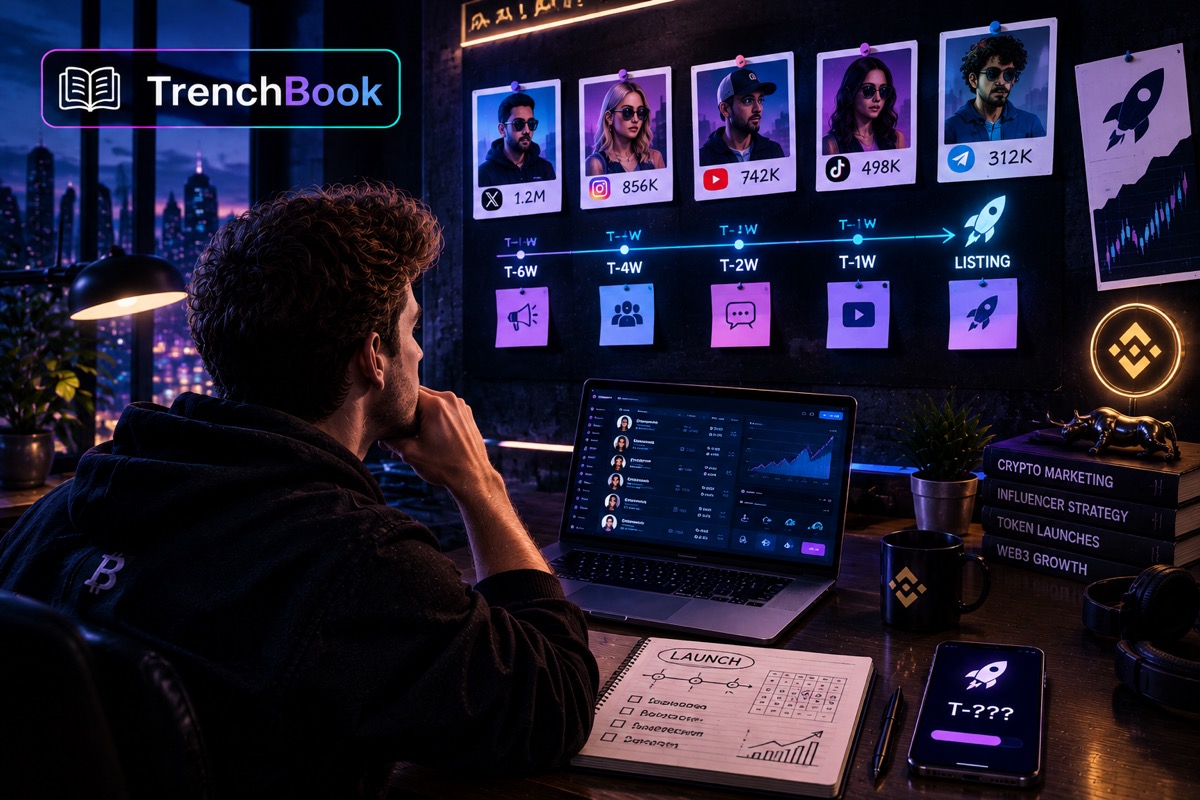
The table below breaks the process into stages counting down from the listing date, based on the same three-phase structure Lever.io recommends.
| Time before listing | What to do | Risk if skipped |
|---|---|---|
| 6 to 8 weeks out | Start outreach, negotiate rates, build roster | No room for pre-launch awareness phase |
| 3 to 4 weeks out | Compressed minimum: confirm roster and brief | Launch-day-only coverage, no build-up |
| 1 week out | Finalize post timing and CA/listing details | Roster scrambling to confirm at the last minute |
| 24 hours out | Emergency mobilization only | Full asking rates, minimal vetting time |
So when should you actually start?
As soon as the listing date is set, not when it’s announced publicly.
Six to eight weeks gives every phase of the campaign room to do its job, three to four weeks still works if outreach starts immediately, and anything inside a week is emergency mode rather than a plan.
Projects that want a roster ready before that clock starts running can book a five-KOL wave timed to their actual listing date.
Oliver Cade is Head of Growth at Trenchbook, where he runs KOL wave campaigns for token launches. Find him on X at @oliver_lad.
Questions
How far in advance should you book crypto KOLs before a listing?
Six to eight weeks is the recommended lead time for full pre-launch, launch-day, and post-launch coverage, though a compressed 3 to 4 week timeline can still work if a project starts outreach immediately.
Can you book KOLs on short notice?
Yes, some agencies advertise mobilizing a roster within 24 hours of campaign approval, but last-minute booking usually means paying closer to full asking rate and skipping deeper vetting on engagement quality.
Does booking timing matter more for a CEX listing than a token launch?
It matters in a different way. A CEX listing has one fixed public announcement moment to align around, while a token generation event or Pump.fun launch has a moving graduation point, so the booking window needs to track whichever fixed date actually exists.
What happens if you book KOLs too late for a listing?
The campaign compresses into launch-day posts alone, with no pre-listing awareness phase, which means the KOL wave arrives at the same moment as the news instead of ahead of it.
Do KOL rates change based on how much notice you give?
Generally yes. Booking with more lead time gives a project room to negotiate rates and compare multiple creators, while last-minute requests concentrate demand on whoever is available immediately.
The booking details for this shape are at /book?shape=listing.
Related notes