On-chain
What is a KOL wave in crypto marketing?
A KOL wave is a coordinated group of crypto creators publishing about the same project within a tight, pre-agreed window, usually 24 to 72 hours, so the posts read as independent confirmation rather than one paid call. icoda.io's Banana Gun wave used 69 KOLs across 77 posts and saw the token's price rise 176% in that window.
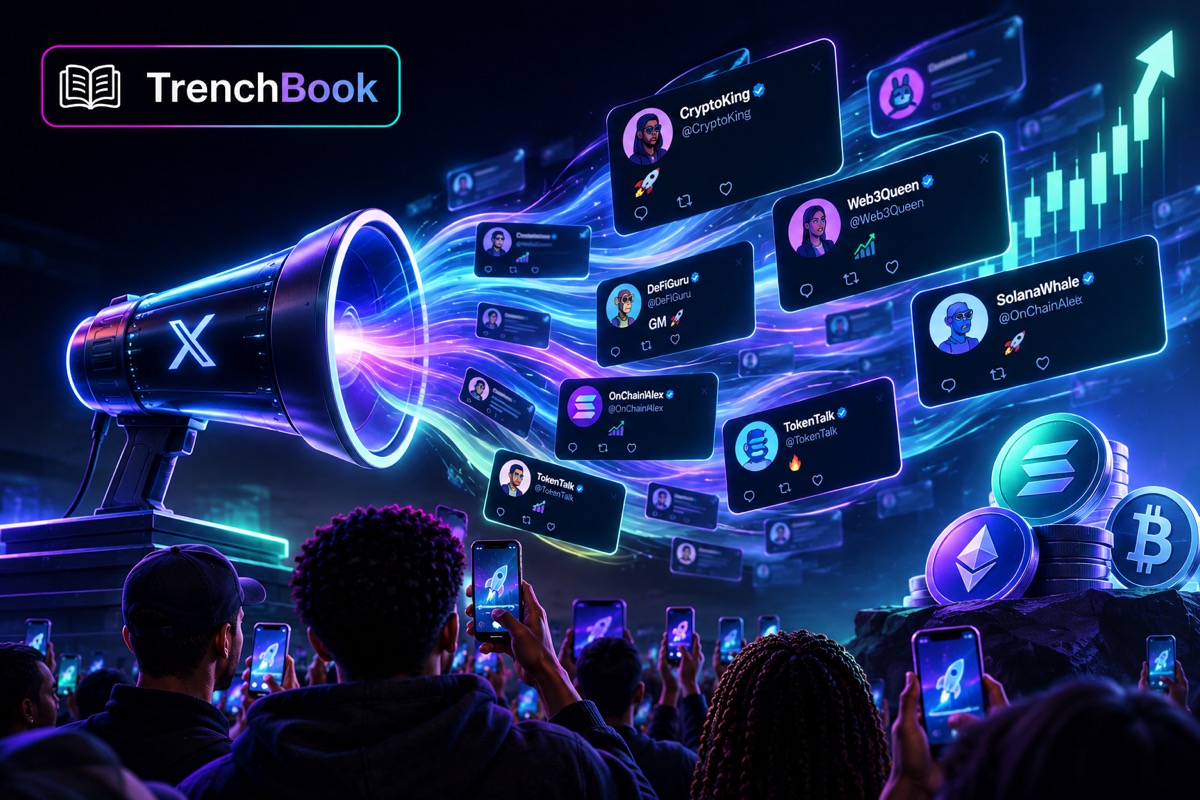
What is a KOL wave, in plain terms?
A KOL wave is a group of crypto creators, sometimes five, sometimes seventy, who all publish about the same project inside the same short window.
The point isn’t just combined reach, it’s timing: posts landing close enough together read as independent confirmation from multiple sources rather than one paid placement.
A wave is planned around a launch moment, a graduation, or an announcement, not around whenever each creator happens to be online.
How is a wave different from booking KOLs one at a time?
Booking KOLs individually over days or weeks produces scattered coverage that never adds up to a single moment anyone notices.
A wave replaces that with a fixed window, usually agreed before a single post goes live, so every creator’s post lands while the others are still fresh. The mechanics change, not just the volume.
A Coinmonks framework on Medium makes this explicit, noting that “most campaigns disappear within hours because they lack coordinated promotion” when creators post independently instead of in sequence.
How many KOLs and how long does a wave typically run?
Wave size scales with budget and ambition, ranging from a handful of accounts to dozens.
Lever.io’s booking model describes a “Growth Engine” activating 5 to 15 KOLs per week for 40 to 80 total across an engagement, and a larger “Campaign Accelerator” deploying 30 to 60 KOLs over two months.
Duration is usually tighter than the booking process itself: most waves run 24 to 72 hours, occasionally stretched to a staggered 7-day sequence for larger campaigns.
What does a real KOL wave look like in practice?
The clearest public example is icoda.io’s Banana Gun campaign case study, which activated 69 unique influencers for 77 total publications within a 72-hour window, reaching a combined 4.27 million tier-1 Twitter followers.
The token’s price moved from $15.63 to $43.12 in that window, a 176% increase, with market cap reaching $112.3 million within six weeks.
At smaller scale, a vetting framework from FORKOFF found a 12-KOL seeding round generated 41 posts and 2.1 million combined views, with the 50,000-to-200,000 follower band driving roughly 5x the ROI of accounts above 500,000 followers.
How much does a KOL wave cost?
Cost scales directly with roster size and creator tier, and the table below lines up the common wave sizes against typical budgets.
| Wave size | KOLs | Duration | Typical cost |
|---|---|---|---|
| Test wave | 3 to 5 | 24 to 48 hours | $5,000 to $15,000 |
| Standard wave | 10 to 15 | 24 to 72 hours | $25,000 to $60,000 |
| Growth Engine | 5 to 15/week, 40 to 80 total | Multi-week | Scales with roster mix |
| Large coordinated wave | 60 to 70+ | 72 hours | $100,000+ |
When should a project run a wave instead of single posts?
A wave earns its cost at moments that need to look like a market event rather than a marketing post: a token generation event, a DEX graduation, or a major protocol announcement.
For everyday testing or a niche audience, a single tweet is usually the better call, since a wave’s cost only pays off when the moment genuinely needs broad, simultaneous coverage.
Want a wave pre-coordinated instead of assembled by hand? Book a five-KOL wave.
Oliver Cade is Head of Growth at Trenchbook, where he runs KOL wave campaigns for token launches. Find him on X at @oliver_lad.
Questions
What is a KOL wave in crypto marketing?
A KOL wave is a coordinated group of creators publishing about the same project within a tight, pre-agreed window, timed to a specific launch moment so the combined coverage reads as broad market interest rather than a single sponsored post.
How many KOLs are in a typical wave?
It ranges by budget. Smaller seeding rounds run around 10 to 12 KOLs, mid-sized waves run 15 to 30, and large coordinated campaigns like icoda.io's Banana Gun case study have used 69 KOLs across 77 posts in a single window.
How long does a KOL wave last?
Most waves run 24 to 72 hours to keep posts close enough together to read as one moment, though some staggered campaigns extend coverage across a 7-day sequence moving from top-tier announcements to micro-tier follow-up posts.
What's the difference between a KOL wave and a single KOL post?
A single post is one creator publishing once on their own schedule; a wave is multiple creators publishing inside the same short window on purpose, so the timing itself signals coordinated, broad interest rather than one paid placement.
How much does a KOL wave cost?
A small test wave across three to five micro-KOLs typically runs $5,000 to $15,000, while a full coordinated wave with a mixed roster commonly costs $25,000 to $100,000 or more, depending on tier mix and roster size.
If you already have the contract address and want a slot today, the seven-field form is at /book. It takes about a minute, and the desk replies before you have finished reading this page.
Related notes