On-chain
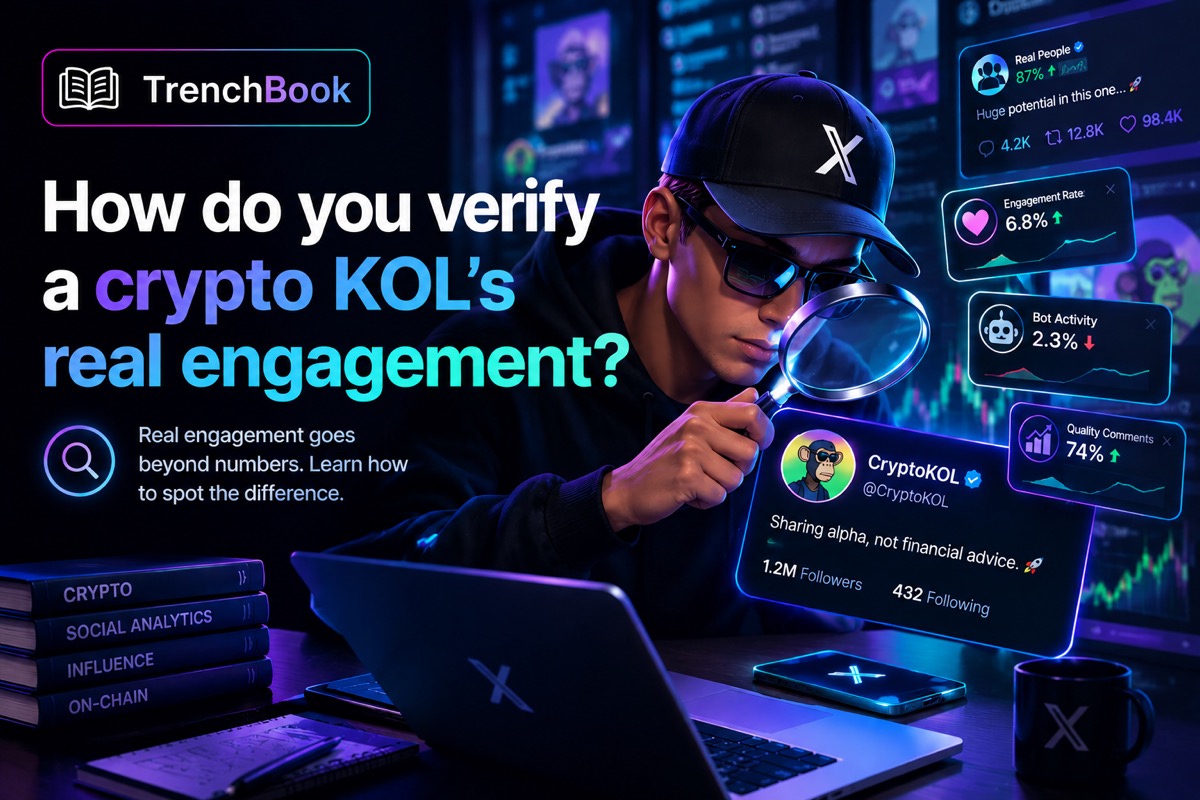
How do you verify a crypto KOL's real engagement?
Verifying a crypto KOL's real engagement means checking engagement rate, comment quality, and audience overlap, not follower count. A healthy rate runs 1% to 5%; anything under 0.5% is a red flag industry-wide. Academic research on crypto Twitter found at least 8% of tweets are spam, and industry estimates put influencer fraud losses at $1.3 billion a year.
What does “real engagement” actually mean?
Real engagement is activity from accounts that behave like people, not accounts that exist to inflate a number. That means checking who is liking and replying, not just how many. Follower count tells you the ceiling of an audience; engagement rate and comment quality tell you whether anyone inside that ceiling is actually paying attention. A KOL with 200,000 followers and 400 genuine replies is worth more than one with 200,000 followers and 4,000 replies from the same 30 bot accounts.
What’s a healthy engagement rate for a crypto KOL?
Lever.io’s fraud detection guide puts a healthy engagement range at 1% to 5% across X and Instagram, with anything under 0.5% flagged as suspicious in the crypto niche specifically, for example fewer than 500 likes on a 100,000-follower account. That threshold isn’t a rough guess. A 9-point vetting framework from FORKOFF sets a similar range of 1% to 6% for nano accounts and flags anything under 0.5% on accounts above 100,000 followers as likely bot inflation. Rates that sit far above this range deserve scrutiny too, since unnaturally high engagement is often the same fraud running in the opposite direction.
How do you check for bots and fake followers?
Start with a growth chart before anything else, since real audiences grow in bursts tied to real events, not straight vertical lines. Tools like HypeAuditor and Modash, referenced in Tapfiliate’s fraud research, score audience authenticity and flag suspicious growth spikes, and the same research estimates influencer fraud costs brands $1.3 billion annually across all verticals, not just crypto. An academic study of crypto Twitter found that at least 8% of tweets in its dataset were identifiable spam, with the researchers noting bot activity was likely higher than a simple filter could catch, including one bot cluster responsible for over 16,000 spam tweets promoting a single token.
How do you audit comment quality by hand?
Automated tools catch scale, but a manual read catches what they miss. Pull 10 to 20 recent comment threads and read them, not skim them, looking for generic one-word replies like “LFG” or ”🚀” repeated by the same handful of accounts across multiple posts. FORKOFF’s checklist calls this out directly, flagging the pattern of “the same 30 accounts replying LFG” as a sign of an engagement pod rather than an organic audience. This step takes about 10 minutes per KOL, which is short compared to the cost of booking one whose audience turns out to be empty.
What does a full verification pass look like?
The table below lays out a practical sequence, combining the automated and manual checks above with rough time estimates for each.
| Check | Method | Time | Red flag |
|---|---|---|---|
| Engagement rate | (Likes + replies) / followers, last 20 posts | 5 min | Below 0.5% on accounts over 100K followers |
| Follower authenticity | HypeAuditor or Modash score | 2 min | Above 15% of followers flagged as fake or bot |
| Comment quality | Manually read 10 to 20 threads | 10 min | Same accounts repeating generic replies across posts |
| Follower growth history | Social Blade or platform-native chart | 2 min | Sudden vertical spikes with no matching news event |
| On-chain wallet check | Signed message from the KOL’s stated wallet | 2 min | Refusal, or a wallet with no organic transaction history |
| Geographic audience match | Platform-native analytics | 3 min | A single non-US country exceeding 15-20% for a US-focused campaign |
What other checks matter beyond the numbers?
Disclosure history is a quiet but reliable signal. FORKOFF’s audit of more than 160 sampled crypto influencers found fewer than five consistently disclosed paid promotions, which means most of the market is already skipping basic compliance, a habit that tends to correlate with skipping honesty about audience quality too. Contract terms matter just as much as the vetting itself. Requiring platform-native analytics access instead of screenshots, and structuring payment around milestones rather than upfront cash, both remove the incentive to fake the numbers after the fact. Projects that want this vetting done before a name ever reaches their shortlist can browse vetted KOLs with tracked performance history, or book a five-KOL wave with verification built into the process.
How to assemble and book a roster is on the hiring guide.
Oliver Cade is Head of Growth at Trenchbook, where he runs KOL wave campaigns for token launches. Find him on X at @oliver_lad.
Questions
How do you know if a crypto influencer's followers are fake?
Check the follower growth chart for sudden vertical spikes with no matching news event, then run the account through an authenticity tool like HypeAuditor or Modash, which flag accounts where more than 15% of followers show bot or fake-account patterns.
What is a good engagement rate for an influencer?
A healthy engagement rate generally falls between 1% and 5% of followers, measured as likes plus replies across recent posts. In the crypto niche specifically, anything under 0.5% on an account with more than 100,000 followers is treated as a red flag for inflated or purchased engagement.
How much does influencer fraud cost brands?
Industry estimates put influencer fraud costs at roughly $1.3 billion annually across all verticals, driven by fake followers, bot engagement, and inflated reach that brands pay for but never actually receive.
Can you buy fake engagement on Twitter?
Yes, and it is common enough that academic researchers studying crypto Twitter found at least 8% of tweets in a sampled dataset were identifiable spam, including coordinated bot networks responsible for tens of thousands of near-identical promotional posts.
What tools detect fake followers?
HypeAuditor and Modash are commonly cited tools that score audience authenticity, flag suspicious follower growth, and estimate the share of an audience that shows bot or low-quality account patterns, though manual comment audits and on-chain wallet checks catch signals these tools can miss.
The booking details for this shape are at /how-to-hire-crypto-kols.
Related notes